Picking from baby bottle nipple sizes can feel like a guessing game. The box says one thing, and your baby shows another.
Here is the simple answer. Bottle nipple sizes control how fast milk flows, and your baby’s cues matter more than the age on the label.
What Are Baby Bottle Nipple Sizes and Why Do They Matter?
It refers to the hole at the tip, which sets the milk flow rate. A bigger hole means faster flow. It has nothing to do with how big the nipple looks.
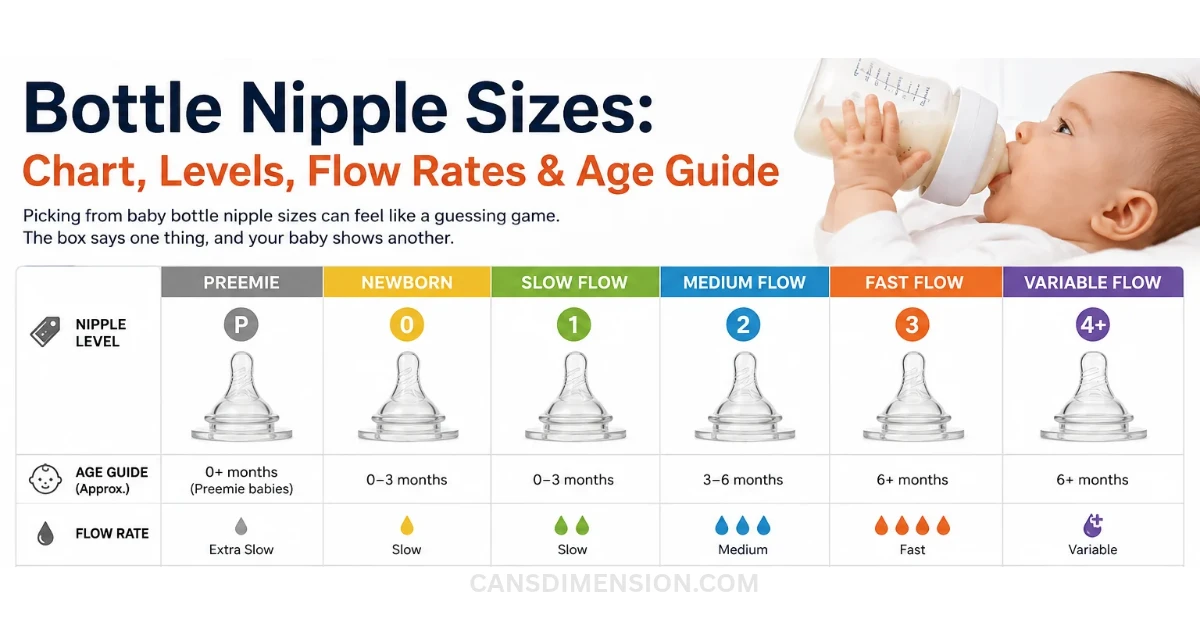
Bottle Nipple Size Chart by Age and Flow Level
Most babies start with a slow flow nipple (Level 1) from birth to about 3 months. Use the chart below as a starting point, not a rule.
Baby Bottle Nipple Sizes and Flow Rate Chart
| Nipple size | Typical age | Flow | Best for |
|---|---|---|---|
| Preemie / extra slow | Newborn, premature | Very slow | Premature babies, weak suckers |
| Level 1 | 0–3 months | Slow | Most newborns |
| Level 2 | 3–6 months | Medium | Longer feeds, eager eaters |
| Level 3 | 6–9 months | Fast | Babies starting solids |
| Level 4 | 9+ months | Extra fast | Big drinkers, older babies |
| Y-cut | 9+ months | Wide cut | Thickened feeds only, on a pediatrician’s advice |
Brands follow similar patterns. Dr. Brown’s offers Preemie and Levels 1 to 4. Philips Avent offers newborn, slow, medium, fast and variable flow options. Similac guidance matches this, with Size 1 for the first 3 months.
Brand matters too. The Alberta chart puts Comotomo Slow Flow and Dr. Brown’s Preemie in the slow group, and Medela Calma at the very fast end.
How to Know When to Change Bottle Nipple Size
Change it when your baby shows signs of frustration, not when a birthday arrives. Alberta Health Services says a well-matched flow lets a baby finish in about 15 to 30 minutes.
Signs the flow is too slow:
- The nipple collapses while sucking
- Feeds run past 30 minutes
- Baby falls asleep before finishing or gets fussy
Signs the flow is too fast:
- Coughing, gulping or choking
- Milk leaking from the corners of the mouth
- Baby pulls away or clamps down on the nipple
Try the drip test. Turn the bottle upside down. A few drops should fall, then stop. A steady stream means too fast.
If signs continue after a change, talk to your pediatrician, a lactation consultant or a feeding therapist. Tell daycare staff your baby’s flow level too.
Bottle Nipple Sizes FAQs
What size bottle nipple for a newborn?
Use the slowest flow bottle nipple your brand offers. This is usually Level 1 or Size 0, depending on the brand. Slow flow also supports paced bottle feeding.
Are bottle nipple sizes the same across brands?
No, bottle nipple sizes vary by brand and bottle type. Flow rates are not standardized, so check the manufacturer’s guidelines and watch how your baby feeds.
When should I switch to a Level 2 nipple?
Most babies move to a Level 2 bottle nipple around 3 months, but age is only a general guide. Consider switching if feeds take too long or your baby seems frustrated. Some babies remain comfortable with Level 1 for several months.
Do breastfed babies need a slow flow nipple?
Yes, a slow flow bottle nipple is usually a good choice for breastfed babies. It helps support a comfortable feeding pace when switching between breast and bottle.
Is a faster nipple always better?
No, a faster flow bottle nipple is not always better. Excessive flow can cause choking, gulping, coughing, and spit-up. Choose the slowest flow that allows your baby to feed comfortably.
How often should I replace bottle nipples?
Replace baby bottle nipples as soon as you notice signs of wear or damage. Cracks, stickiness, thinning, or loss of elasticity mean it is time for a replacement.

My name is Shehzad Ali. I am the admin and author of cansdimension.com. I write simple guides about can sizes and dimensions. I share information to help readers understand cans.